NEIGHBORS READY!
  • Home
  • Family Prep
    • Go Bags
    • Stay Informed
    • Emergency Plan
    • Water Supplies
    • Sanitation and Hygiene
    • Plan Food
    • Home Hazards
  • Community Prep
    • Neighborhood Prep
    • Be 2 Weeks Ready
    • Emergency Comms
    • Evacuation & Assembly
    • Community Caches
    • Training Opportunities
  • News & Events
    • News Topics
    • Ready! News
    • Our Events
  • Hazards
    • Home Fires
    • Wildfires
    • Earthquakes
    • Tsunamis
  • Resources
    • QuakeUp! NW
    • Oregon.gov
    • Washington County Prep
    • Beaverton Emergency Mgmt
    • Tualatin Valley Fire & Rescue
    • CDC
    • FEMA
    • Ready.gov
    • Red Cross
  • About Us
  • Contact
    • Email Us
    • Newsletter Signup
    • Volunteer
  • Home
  • Family Prep
    • Go Bags
    • Stay Informed
    • Emergency Plan
    • Water Supplies
    • Sanitation and Hygiene
    • Plan Food
    • Home Hazards
  • Community Prep
    • Neighborhood Prep
    • Be 2 Weeks Ready
    • Emergency Comms
    • Evacuation & Assembly
    • Community Caches
    • Training Opportunities
  • News & Events
    • News Topics
    • Ready! News
    • Our Events
  • Hazards
    • Home Fires
    • Wildfires
    • Earthquakes
    • Tsunamis
  • Resources
    • QuakeUp! NW
    • Oregon.gov
    • Washington County Prep
    • Beaverton Emergency Mgmt
    • Tualatin Valley Fire & Rescue
    • CDC
    • FEMA
    • Ready.gov
    • Red Cross
  • About Us
  • Contact
    • Email Us
    • Newsletter Signup
    • Volunteer
Picture
Go to Blog Index

Neighborhood Ready! Disaster Scenario Game

4/18/2023

0 Comments

 
PictureBarbara Bracken, Master of Disaster, leads her team through a disaster scenario (4/17/2023)
Over 25 neighbors gathered to play at the Cedar Hills Ready! Disaster Scenario Game. This interactive experience helped prepare neighbors for various disaster scenarios that could occur in the Pacific Northwest. Participants collaborated with neighbors in solving common problems that could be faced during a disaster. By simulating a disaster scenario, players developed knowledge and skills to better respond to a real-life emergency. Many mentioned how the collaborative approach helped them recognize the importance of connecting with neighbors to create a plan before a disaster occurs. 

Read More

Read More
0 Comments

Which Beaverton schools are safe during an earthquake?

3/11/2023

0 Comments

 
In the mid-1990s the Beaverton School District (BSD) ​conducted a district-wide investigation of the seismic stability of its schools and subsequently began a targeted program to seismically upgrade and improve them. 
Picture
Click to go to BSD's Emergency Preparedness Webpage
It's Earthquake Preparedness webpage states, "Because of our community's generous support of the 2014 and 2020 Bonds, the district has built several new schools and seismically upgraded others." These bonds provided the District a unique opportunity to not only address daily operational needs, but also respond to the findings of The Oregon Resilience Plan by constructing disaster resilient schools that are also capable of supporting their surrounding communities as emergency shelters. ​
Read More

Read More
0 Comments

What to do when the next megaquake happens

3/10/2023

0 Comments

 
Most of us have been taught that in an earthquake, we should drop, cover, and hold on. Chris Goldfinger, Professor of Marine Geology and Oregon State University (OSU), challenges this advice in a PBS program that aired on Oct 18, 2022. He suggests your response could vary depending on how much warning you have before the violent shaking starts and what type of building you are in when the quake hits. Continue reading to learn more and watch the 12-minute video. 
Picture
Chris Goldfinger offers new perspectives on what to do when a megaquake happens
Continue Reading

Read More
0 Comments

How neighborhood readiness saved our lives and home from an electrical fire

1/16/2023

8 Comments

 
PictureFive fire engines arrived at our house on 1/4/2023.
You never know when a disaster or an emergency might strike. In that crisis moment, your preparedness and training—with your family and neighbors—might save your life and home.
Bill and I have been teaching disaster and neighborhood readiness for five years as a way to build connected, caring, and resilient neighborhoods. All our training was put to the test on January 4th, 2023, when a power surge ignited an electrical fire in our basement, threatening our lives and property.
We survived and saved our home because of our training and the support of our neighbors. I’m writing this blog to pass along lessons we learned, including what skills and preparation counted the most during this emergency. My hope is that you might learn from our experience and take steps to get prepared, to protect yourself and family, today. This could happen to you. Be ready for it!

Read More

Read More
8 Comments

Six lessons learned from our house fire

1/16/2023

0 Comments

 
When preparing for disasters, it’s hard to know exactly what might make the biggest difference in a future emergency. Fortunately, most disaster preparations can be helpful in a variety of disasters and emergencies. If you prepare for evacuation, such as getting your go bags ready, you’ll be ready to evacuate no matter what the cause, whether that’s due to a wildfire or an earthquake, both, or something else.
Bill and I have been teaching disaster and neighborhood readiness for five years as a way to build connected, caring, and resilient neighborhoods. Our skills were put to the test on January 4th, 2023,  when a power surge ignited an electrical fire in our basement, threatening our lives and property.  We survived and saved our home because of our training and the support of our neighbors. What made the most difference to us during this crisis?
Picture
Do you have enough fire extinguishers? Do you know how and when to use them? Read the blog to learn about this and more.
READ MORE

Read More
0 Comments

Keeping kids safe in a medical emergency

1/1/2023

0 Comments

 
Link to Hero Kids RegistryClick to register for HERO kids
​​Every moment counts in a medical emergency. Make sure first responders have critical information about your kids, even if you aren't there. Take advantage of a free, confidential service, sponsored by OHSU. 
HERO Kids Registry is a voluntary, no-cost system that lets any Oregon family share critical information about their child’s health before an emergency. The information can be quickly accessed by emergency medical services (EMS) and hospital emergency department (ED) providers, so they have the information they need when they need it. 
​By registering with HERO Kids, you give EMS and ED providers a head start on understanding your child's medical history, unique needs and individualized supports. For example, it helps emergency responders to know if a young patient is non-verbal.
HERO Kids is for any Oregon child or young adult (through age 26). It is especially useful for young people with complicated or chronic health conditions, and for those who experience developmental disabilities or mental health conditions. Learn more and register your kids at the 
OHSU Hero Kids Registry. 

0 Comments

Earthquake Regional Impact Analysis

12/29/2022

1 Comment

 
What's the risk of being unprepared for a major earthquake for people living in the Portland Oregon metropolitan area? What kind of losses and damage might occur? To answer these questions, the Regional  Disaster Preparedness Organization (RDPO) partnered with the Oregon Department of Geology and Mineral Industries (DOGAMI) to create a report describing potential impacts to Clackamas, Multnomah, and Washington counties from earthquakes, including a magnitude 9.0+ Cascadia Subduction Zone earthquake. 
The report provides damage and casualty estimates to buildings, people, and key infrastructure sectors resulting from a major earthquake in the Portland metropolitan region. The study’s estimates of injuries and fatalities, building damages, and other impacts helps communities, the region, and the state better prepare for, respond to, and recover from major earthquakes. 
Check out the 10-minute video to get a quick overview, or click on the images to get a summary of the impacts or read the full report. 
Picture
Click image for the full report.
Picture
Click the image to get a summary of the impact estimates.
Picture
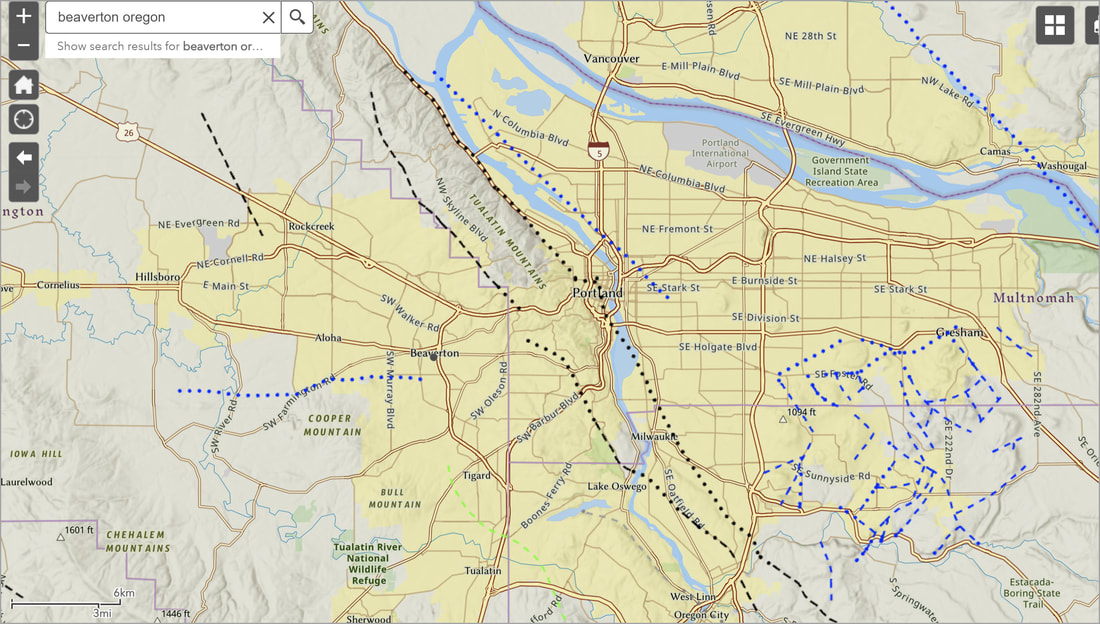
Click image to access an interactive map and discover hazards in your neighborhood in Oregon.
1 Comment

2 Weeks Ready: Neighbors Helping Neighbors

12/16/2022

1 Comment

 
Picture
Once a disaster strikes, the time to prepare has passed. The 2 Weeks Ready program recommends people have an emergency plan and enough food, water and supplies to survive on their own for at least two weeks following any large-scale disaster. This program also encourages people to get to know their neighbors and plan together. Check out this brochure for some great ideas and tips on activities to do with your neighbors. This program is being developed the Oregon Department of Emergency Management (OEM).  
1 Comment

Life Saving Holiday Gift Ideas

12/3/2022

1 Comment

 
Are you wondering about some creative gift ideas that could keep your loved ones safe? The Holiday Edition of the quarterly newsletter from the Seattle Emergency Communications Hubs' December Newsletter has some amazing holiday gifting ideas. Check it out! 
Picture
Click the image above to view the full newsletter article.

Author

Stan Houseman, the Master of Disaster and a QuakeUp! Founder submitted this topic to Cedar Hills Ready!
Original newsletter written by Seattle Emergency Communications Hubs. 

1 Comment

Get Home Safe: Severe Weather Travel Tips

11/24/2022

0 Comments

 
Its Thanksgiving week, and many of us are traveling to enjoy family or friends during the holiday season. Bill and I are at the Oregon coast, watching a storm roll in. It's wild and beautiful: the wind catches the white tops of waves and sideways rain pelts our umbrellas. If you are planning a trip during severe weather this season, consider first reading this article from Portland Bureau of Transportation for tips on how to make your trip safe. This article includes tips for planning ahead, using multiple forms of transportation, and what to do if you get stranded in your vehicle. You can download fliers on the website, translated into multiple languages. Click the two sample fliers below. More translations are available on this website. 
Picture
Click the image above for the English version of this flier.
Picture
Click the image above for the Spanish version.

Author

Karen Ronning-Hall, Disaster Preparedness Evangelist, living in beautiful Portland, Oregon, with hubby Bill, daughter Geneva, Bean dog, Thumper kitty, and Terry the turtle.  

0 Comments

Unprepared: An Oregon Field Guide Special

11/23/2022

0 Comments

 
Oregon Field Guide spent a year-and-a-half probing the state of Oregon's preparedness, and found that when it comes to bridges, schools, hospitals, building codes, and energy infrastructure, Oregon lags far behind many quake prone regions of the country. Check out this informative 1-hour video. (Aired September 30, 2015.)
Picture
Click image to play the video
0 Comments

Wildfires increase risk of floods

10/27/2022

0 Comments

 
Picture
Click this image to go to: https://www.floodsmart.gov/wildfires
FEMA News Release
​
Oct 27th, 2022, FEMA News Desk (425) 487-4610
Purchase Flood Insurance to Protect What You’ve Built
BOTHELL, Wash. – If you do not carry National Flood Insurance Program (NFIP) insurance, now is the time to buy it. Wildfire season is slowing down, and once the fires are out, people and communities are at risk for another threat, flooding.  Wildfires leave the ground charred and unable to absorb water. This creates a flash flooding potential for years to come, even in areas that rarely experienced flooding in the past. Sometimes these flash floods can pick up ash and large debris, turning into mudflows that are highly destructive.
Unlike many causes of damage, flooding and mudflows are generally not covered by a homeowners’ policy. An uninsured flood loss can eat into your life’s savings. Floods are the most common and expensive natural disaster in the U.S.  Just an inch of water in an average-sized home can cause $25,000 in damage. A NFIP policy protects against such losses and can ensure that a flood doesn’t bring financial ruin.
Flood insurance is easy to get, the only requirement is that you live in an NFIP participating community. These include cities, counties and other jurisdictions that manage development. You don’t need to live in a floodplain to purchase a policy. If you live outside a floodplain, insurance will likely cost less than for those living in a higher risk area.
Buyers should be aware of the 30-day waiting period for an NFIP policy to go into effect. It is important to purchase a policy now to protect your property against the continuing threat of flooding. You can usually purchase flood insurance from your current agent. If that isn’t possible, NFIP representatives can help you find one.
As with any insurance, be sure to talk with your agent about the specifics of your policy. Find out more about your risk and flood insurance at www.floodsmart.gov. To purchase flood insurance or find an agent, call 1-800-427-4661.
###

Author

Brett Holt, Private Sector Liaison | External Affairs Division | Region 10
Follow FEMA Region 10 on Twitter and LinkedIn for the latest updates and visit FEMA.gov for more information.
 FEMA’s mission is helping people before, during, and after disasters.Write something about yourself. 

0 Comments

Is it always a good idea to drop cover & hold on?

10/24/2022

0 Comments

 
Did you practice your drop-cover-hold skills in last week's Shake Out earthquake drill? That’s a great survival strategy to use during an earthquake in many homes and seismically stable structures. In other less stable structures around Portland, it may be safer to evacuate. Check out this PBS report to learn why.”
0 Comments

Shake Out! Earthquake Drill - Lessons Learned

10/20/2022

0 Comments

 
Picture
Did you practice your drop-cover-hold skills during the International Shake Out Earthquake Drill? My family did and as usual, we had fun and learned lessons.
In our practice, we follow the drill suggestions on the Oregon Shake Out website. When the drill started, we dropped to the floor, found the nearest place to cover ourselves (in our case, under our kitchen table), and then held on for a few minutes, as if waiting out a major shake. (You can practice this drill at any time.) While we waited, we looked around and imaged how an earthquake might create damage and hazards: what could drop off counters and shelves and off the walls. Making notes of these observations will help us better secure our house for a future earthquake.
After a few minutes (in a real earthquake, after the shaking stops), we practice our neighborhood ready drill, which includes going through the 9 steps to take after the disaster for an earthquake. I keep the list of the 9 steps in my under-bed-kit and also on the refrigerator to make it easy to find. 
Preparing with neighbors makes you more resilient and increases everyone's chances of survival. Once you have taken care of your family, secured your house, its time to make sure that your neighbors are ok and secure the neighborhood. They will do the same for you, assuming your have met with them ahead of time in a Neighborhood Ready! meeting. (Hint, hint!) After an earthquake, you assemble at a predetermined place, form teams to check to make sure everybody is OK, check everybody's gas meters, and shut the gas meters off, if there is evidence of a leak.
​Here's what we learned during our 2022 drill: 
Lessons learned during our home check: 
  • We had fun getting on our gear, going through our checklist, and checking on neighbors (as a pair). Many people were not home, but of the few we made contact with, they were appreciative. :) 
  • We discovered one of our under-bed kits was not easily accessible, and one had some items that were falling apart and needed replacement. I didn't realize my gloves were coming apart; I discovered that by putting them on. 
  • We spend a lot of time in our family room, and we don't have a lot of emergency supplies in there. Our family room is a wall of windows, and I don't always keep shoes in there! Time to add a box of critical safety gear in the family room. 
  • One of us had trouble getting under the table due to knee trouble. Some vulnerable seniors may have the same issue. If you are in this group, it's a good idea to practice alternative safety steps, like using a pillow to protect your head during the earthquake, especially if its hard to get on hands and knees to get under a table. 
  • We had moved our fire extinguisher, and couldn't find it right away! Need to have a consistent place for the fire extinguisher. 
  • My HAM radio got into a mode that I couldn't figure out right away. I had to troubleshoot the problem. I need more practice! 
Lessons learned during neighborhood checks: 
  • Lots of people weren't home when we did our home checks. We remembered that we should be checking their gas meter, anyway. Whatever team goes out to check on the gas needs to carry an all-in-one tool. 
  • We need to have a backup to our neighborhood safe meeting place. For the second year in a row, the person who hosts our neighborhood meeting place was out of town during Shake Out. That could happen in a real earthquake, so we need to have a better backup. 
What lessons did you learn? Share in the comments below. :) 

Picture

Author

Karen Ronning-Hall, Disaster Preparedness Evangelist, living in beautiful Portland, Oregon, with hubby Bill, daughter Geneva, Bean dog, Thumper kitty, and Terry the turtle.

0 Comments

Beaverton Emergency Preparedness Fair

10/8/2022

1 Comment

 
On Saturday, Oct 8th, at the Beaverton Library, Cedar Hills Ready! and QuakeUp! volunteers participated in the Beaverton Emergency Preparedness Fair hosted by Sexton Mountain, Highland, and West Beaverton Neighborhood Association Committees (NACs). We helped over 600 neighbors with information and tips on how to get prepared. Our volunteers set up five booths covering the following topics: water resiliency, go bags, home utilities in an emergency, organizing preparedness supplies in apartments and small spaces, and preparing community caches in a barrel. We thank our volunteers, Beaverton NACs volunteers, and the City of Beaverton who made this event a success! 
If you missed the fair, you can find information on the topics we covered on this website. 
​
Picture
Picture
Picture
Picture
Picture
Picture
Picture
Picture
Picture
1 Comment
Forward>>

    Author

    Write something about yourself. No need to be fancy, just an overview.

    Archives

    November 2025
    October 2025
    June 2025
    March 2025
    February 2025
    January 2025
    July 2024
    April 2024
    February 2024
    January 2024
    November 2023
    October 2023
    April 2023
    March 2023
    January 2023
    December 2022
    November 2022
    October 2022

    Categories

    All
    Climate Prep
    Community Prep
    Earthquake Prep
    Emergency Comms
    Events & Training
    Family & Personal Prep
    Fire Safety
    Food Prep
    Go Bags & Evacuation
    Sanitation & Hygiene

    RSS Feed


Contact Us
​About Us
Picture
Picture
© Neighbors Ready! 2025. All rights reserved.