NEIGHBORS READY!
  • Home
  • Family Prep
    • Go Bags
    • Stay Informed
    • Emergency Plan
    • Water Supplies
    • Sanitation and Hygiene
    • Plan Food
    • Home Hazards
    • First Aid Plan
  • Community Prep
    • Neighborhood Prep
    • Be 2 Weeks Ready
    • Emergency Comms
    • Evacuation & Assembly
    • Community Caches
    • Training Opportunities
  • News & Events
    • News Topics
    • Ready! News
    • Our Events
  • Hazards
    • Home Fires
    • Wildfires
    • Earthquakes
    • Tsunamis
  • Resources
    • QuakeUp! NW
    • Oregon.gov
    • Washington County Prep
    • Beaverton Emergency Mgmt
    • Tualatin Valley Fire & Rescue
    • CDC
    • FEMA
    • Ready.gov
    • Red Cross
  • About Us
  • Contact
    • Email Us
    • Newsletter Signup
    • Volunteer
  • Home
  • Family Prep
    • Go Bags
    • Stay Informed
    • Emergency Plan
    • Water Supplies
    • Sanitation and Hygiene
    • Plan Food
    • Home Hazards
    • First Aid Plan
  • Community Prep
    • Neighborhood Prep
    • Be 2 Weeks Ready
    • Emergency Comms
    • Evacuation & Assembly
    • Community Caches
    • Training Opportunities
  • News & Events
    • News Topics
    • Ready! News
    • Our Events
  • Hazards
    • Home Fires
    • Wildfires
    • Earthquakes
    • Tsunamis
  • Resources
    • QuakeUp! NW
    • Oregon.gov
    • Washington County Prep
    • Beaverton Emergency Mgmt
    • Tualatin Valley Fire & Rescue
    • CDC
    • FEMA
    • Ready.gov
    • Red Cross
  • About Us
  • Contact
    • Email Us
    • Newsletter Signup
    • Volunteer
Family Prep
Pack Go Bags & Kits
Stay Informed
Family Emergency Plan

Store Water & Supplies
Sanitation & Hygiene
Store Food for Cooking
​
Eliminate Home Hazards

Emergency Food & Cooking 

How will you feed your family when the power goes out for days or weeks? Making a food plan is a key step to being ready for disasters. You and your household, including service animals, pets, and large animals, need food to survive any emergency. With a food plan, you'll know how to gather and store non-perishable food and how to prepare it without electricity and gas. ​
Choose foods your family will eat; Include comfort foods in youR emergency storage

Create a Non-Perishable Food Inventory

When putting together your emergency food supplies, consider the following: 
  • Store a 2-week supply of non-perishable food. 
  • Choose foods your family will eat; include comfort foods.
  • Remember any special dietary needs for family members. 
  • Check expiration dates and rotate food out as needed.
Consider the following shelf-stable foods to include in your emergency food supplies. Download our Shelf-Stable Emergency Food List for to help with your inventory. Suggested items include: 
  • Water - You can't survive without it! 1-2 gallons per person and pet per day. Check our Water Supplies page for more details.
  • Ready-to-eat canned meats, fruits, vegetables and a can opener. 
  • Protein or fruit bars
  • Dry cereal or granola
  • Peanut butter
  • Dried fruit
  • Canned juices
  • Non-perishable milk (powdered or canned) or shelf-stable plant-based milks (almond, soy, or coconut)
  • High-energy foods
  • Food for infants
  • Comfort/stress foods
  • Shelf-stable pet food (canned or dried)
Gathering two weeks' worth  of food may seem overwhelming. You can begin by starting small, recognizing that it may take a while to build up a food stash. Oregon Emergency Management's Be 2 Weeks Ready curriculum 
Picture
Source: Be 2 Weeks Ready Toolkit by Oregon Emergency Management
Picture
Click to download this list.

Storing your Emergency Food

Picture
To store emergency food, keep it in a cool, dark, dry place, use airtight containers (like Mylar bags, food-grade buckets, or mason jars) to protect from pests and moisture, and rotate stock (First-In, First-Out) regularly to ensure freshness. Store away from heat sources and chemicals, use proper labeling, and don't forget to include water and purification methods. 
If space in your home is limited, be creative with finding space in the back of closets or cabinets, or under furniture, such as beds or couches. Take some time to declutter to create more usable space.
​Be mindful of where you store bagged items since they can be easily chewed through by insects and animals. 
​Don’t pack away supplies and forget about them. Rotate your extra supplies into your regular meal routine as they start to expire.​

Different Ways to Cook Food

While you’re building up your food supply, think about how you might cook indoors without traditional appliances that require power and how you might cook outdoors. Whatever alternative cooking methods you prefer, it’s best to have more than one in mind and stock the necessary fuel sources. Stock a variety of alternative fuel sources to use when preparing food, such as charcoal, propane, or wood. Use disposable or inexpensive dinnerware and utensils that are easy to clean with minimal water.
Picture
Source: Be 2 Weeks Ready Toolkit by Oregon Emergency Management
CAUTION: Only use an indoor fireplace or wood-burning stove if it’s been regularly cleaned and maintained. Otherwise, it can cause a fire, carbon monoxide poisoning, or both. Burning any fuel in a low-oxygen environment, where windows are closed and there’s little or no ventilation, can result in the production of dangerous carbon monoxide. NEVER use camp stoves or othe.r cooking sources meant for outdoor use only indoors. If that’s all you can use, go outside to do your cooking.

Cooking without Electricity Blogs

Picture
Click image to find out how to make a salad from foraged greens, from the blog series, "Recipes after a Disaster" (image and blog by Lincoln Thomas)
Read our blogs for timely information about preparedness!  Check out the following blogs where author, Lincoln Thomas describes how to feed yourself during an extended power outage.
  • Day 1 - Menu strategy: Eat Fresh Foods First
  • Day 2 - Food Use & Storage Strategies
  • Day 3 - Meals from Canned Foods
  • Day 4 - Foraging Basics
  • Day 5 - Pantry Soup Warmed by Tea Candles​​​

Video: Food Storage & Prep for a Disaster

Learn about food prep and safety for a disaster, from our speaker, Maureen Quinn Lores, an educator from the Oregon State University extension service. In this video, you'll learn about food and water requirements in a disaster, cooking how tos, hazards to avoid, recipes and best practices. Scroll down for resources and links to food-related disaster prep resources. 

Food Safety for Power Outages

Emergencies can happen, especially with extreme weather conditions. When they do, the best strategy is to already have a plan in place. This includes knowing the proper food safety precautions to take before, during, and after a power outage — and being prepared to safely handle food and water in the event that flooding occurs.
​
You can prepare BEFORE an outage by doing the following:
  • Freeze containers of water and gel packs to help keep food cold if the power goes out.
  • Install appliance thermometers; keep the freezer at 0 degrees F and the refrigerator at 40 degrees
  • Freeze food that you don’t need immediately
  • Keep a cooler available if power outage lasts longer than 4 hours.
  • Store non-perishable foods on higher shelves to avoid flood water.
  • Be cautious of dented, deformed or bloated cans, as this can be an indication of spoiled food that can be deadly.
  • Check expiration dates and rotate food out as needed.
  • To keep things sanitary and reduce fire risk, don’t let food waste accumulate inside. 
Picture
Source: USDA
DURING a power outage,  keep these safety considerations in mind:
  • Keep the refrigerator and freezer doors closed to maintain cold temperatures
  • A full freezer will hold its temperature for 48 hours and 24 hours if it is half-full.
  • A fridge will keep food safe for 4 hours.
  • Place perishable foods in a cooler with ice before food starts to go bad.
  • Use non-perishable, pasteurized milk in cans or cartons quickly once opened. 
  • Cooking indoors with barbecues or grills can lead to deadly consequences, including the risk of carbon monoxide poisoning, fires and other life-threatening hazards.
  • Keep cooking and eating utensils clean.
Picture
Source: USDA
AFTER the power is back on, take these steps:
  • Check the temperature inside your refrigerator and freezer. If they are still at safe temperatures, no need to discard food.
  • Do not eat refrigerated food if you’ve lost power for longer than four hours and do not eat any frozen food that has thawed.
  • e sure to throw out raw meets, poultry, or seafood, dairy products (except hard cheeses), cooked pastas, leftovers, or produce.
  • Throw away any food that’s been at room temperature for two hours or more.
  • When in doubt, throw it out! The last thing you need is a case of food poisoning during a crisis! 
Picture
Source: USDA

Food Safety After a Flood

After a flood, follow these food safety guidelines: 
  • ​DO NOT EAT any food that may have touched flood water. 
  • DISDCARD FOOD not in waterproof containers; screw-caps, snap lids, pull tops, and crimped tops are not waterproof. 
  • DISCARD cardboard juice/milk/baby formula boxes and home canned foods.
  • DISCARD any damaged cans that have swelling, leakage, punctures, holes, fractures, extensive deep rusting, or crushing/denting severe enough to prevent normal stacking or opening. 
Picture
Source: USDA

More Resources

Check out these sources for more information and practice: 
Picture
No Power, No Problem: Tips to Help You Thrive in the Face of Disaster
The Cascadia Earthquake, when it occurs, will cripple western Oregon's communications and infrastructure. These tips will help residents manage through what could be months of no electricity and other modern conveniences.  Check out this article from Oregon State Extension Service called No Power? No Problem. 

Survival Basics: Water
Explore a variety of methods for purifying and storing water for an extended emergency. Learn how to find or make safe water from additional sources from this OSU Extension Service Article. ​
Picture

Picture
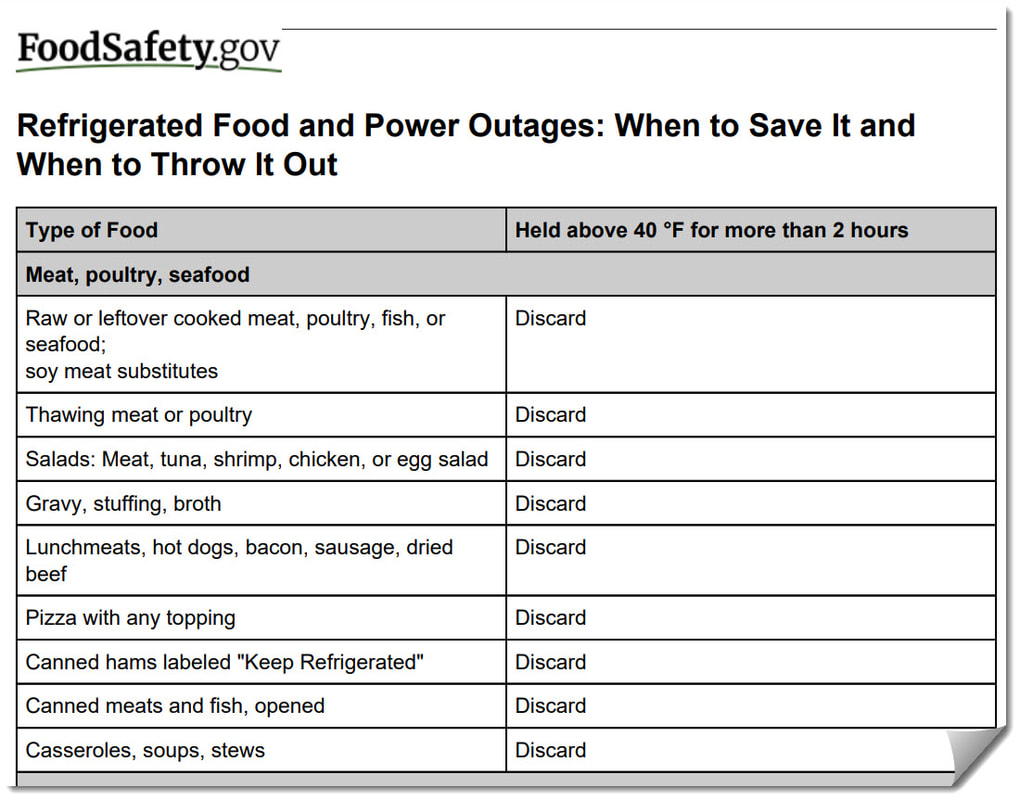
Food Safety During Power Outage
As the USDA notes in Keeping Food Safe During an Emergency, your refrigerator will keep food safe for up to 4 hours during a power outage. Keep the door closed as much as possible. Discard refrigerated perishable food such as meat, poultry, fish, eggs, and leftovers after 4 hours without power. After a power outage never taste food to determine its safety. You will have to evaluate each item separately - use this chart as a guide. When in Doubt, Throw it Out! 

Picture
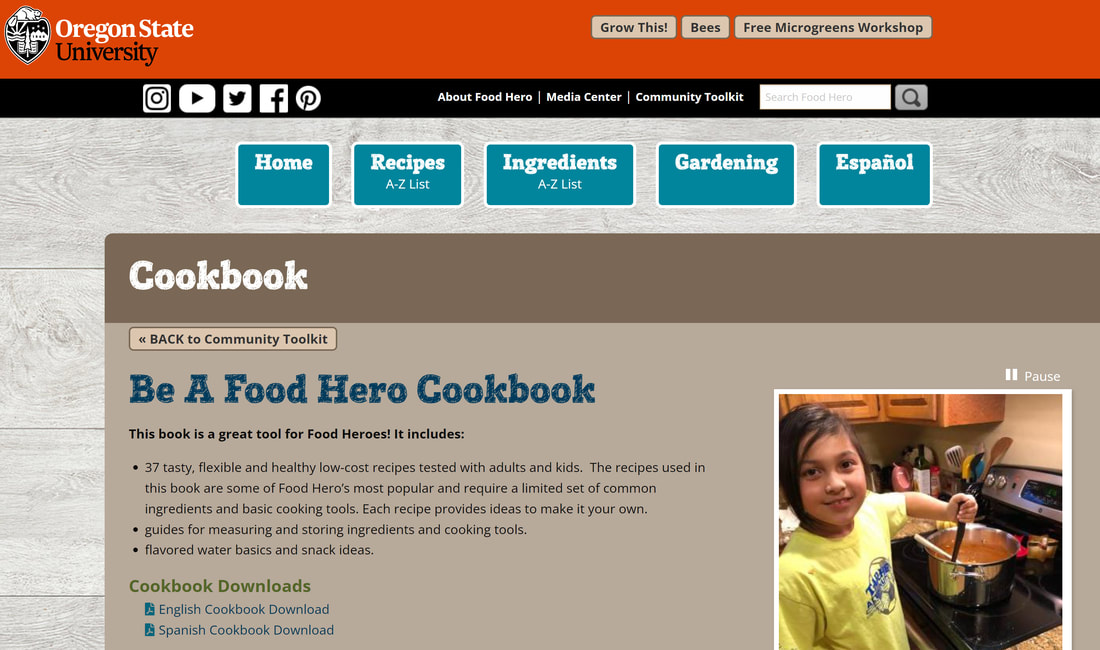
Food Hero Cookbook
This Cookbook includes 37 tasty, flexible and healthy low-cost recipes that require a limited set of common ingredients and basic cooking tools. Includes English and Spanish cookbook downloads. Check it out here: . 
https://www.foodhero.org/cookbook

Contact Us
​About Us
Picture
Picture
© Neighbors Ready! 2025. All rights reserved.