NEIGHBORS READY!
  • Home
  • Family Prep
    • Go Bags
    • Stay Informed
    • Emergency Plan
    • Water Supplies
    • Sanitation and Hygiene
    • Food Plan
    • Home Hazards
    • First-Aid Plan
  • Community Prep
    • Neighborhood Prep
    • Be 2 Weeks Ready
    • > Community Hosts
    • Emergency Comms
    • Evacuation & Assembly
    • Community Caches
    • Training Opportunities
  • News & Events
    • Our Events
    • Ready! News
  • Hazards
    • Home Fires
    • Wildfires
    • Earthquakes
    • Tsunamis
  • Resources
    • QuakeUp! NW
    • Oregon.gov
    • Washington County Prep
    • Beaverton Emergency Mgmt
    • Tualatin Valley Fire & Rescue
    • CDC
    • FEMA
    • Ready.gov
    • Red Cross
  • About Us
  • Contact
    • Email Us
    • Newsletter Signup
    • Volunteer
  • Home
  • Family Prep
    • Go Bags
    • Stay Informed
    • Emergency Plan
    • Water Supplies
    • Sanitation and Hygiene
    • Food Plan
    • Home Hazards
    • First-Aid Plan
  • Community Prep
    • Neighborhood Prep
    • Be 2 Weeks Ready
    • > Community Hosts
    • Emergency Comms
    • Evacuation & Assembly
    • Community Caches
    • Training Opportunities
  • News & Events
    • Our Events
    • Ready! News
  • Hazards
    • Home Fires
    • Wildfires
    • Earthquakes
    • Tsunamis
  • Resources
    • QuakeUp! NW
    • Oregon.gov
    • Washington County Prep
    • Beaverton Emergency Mgmt
    • Tualatin Valley Fire & Rescue
    • CDC
    • FEMA
    • Ready.gov
    • Red Cross
  • About Us
  • Contact
    • Email Us
    • Newsletter Signup
    • Volunteer
Family Prep
Go Bags & Supplies
Stay Informed
Emergency Plan

Water Plan
Sanitation & Hygiene
Food Plan
​
Home Hazards
First-Aid Plan

Water Supplies Plan

​When the BIG ONE shakes Oregon, or an ice storm freezes our pipes solid, it will damage our water and sanitation systems. What's your plan for staying hydrated and clean, if the water stops flowing for weeks? You can survive a couple of weeks without food but only three days without water. Access to safe drinking water, sanitation, and hygiene is crucial to human health and well-being.  On this page, we include information, videos, and free resources to help you take steps now to ensure you and your family have enough clean water to survive. 
How long Can you survive without water? 3 Days
​On this page, you'll find these sections: 
Plan A: Store Emergency Water
  • Water planning worksheet & video: Water survival skills​
  • How much water? Do the math. 
  • Water storage containers
  • Water sources in your home
  • Preserving water in your home
  • More resources
Plan B: Acquire & Treat Outside Water
  • Making potable water
  • How to purify water
  • How to Build a 2-bucket water filtration system
  • Methods for treating water
  • Creating a fresh batch of bleach
  • Disinfecting water in 55-gallon drums
  • Purifier of Water: one & done!
Picture
Click to open and download the worksheet

Water Resiliency Plan

Download our Emergency Planning Water Worksheet to help you create a water resiliency plan. This worksheet and the video walks you through a two-step process to achieve emergency water resiliency. For plan A, you start with calculating how much water your family needs to store for a 2-week emergency water supply. This is your highest priority, because you can only survive 3 days without clean water. Once you've have enough water stored for an emergency, you can develop a backup plan, Plan B, to acquire the tools and skills for purifying water from the environment, in case you run out of your emergency water supplies. 
Downloads: (1) Emergency Water Planning worksheet; (2)  Presentation with speaker notes; (3) Additional resource links mentioned in the presentation. 

How much water? Do the math. 

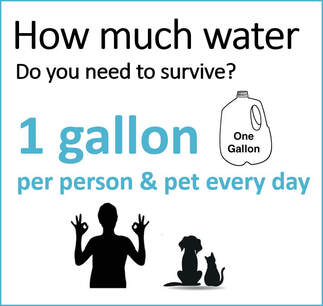
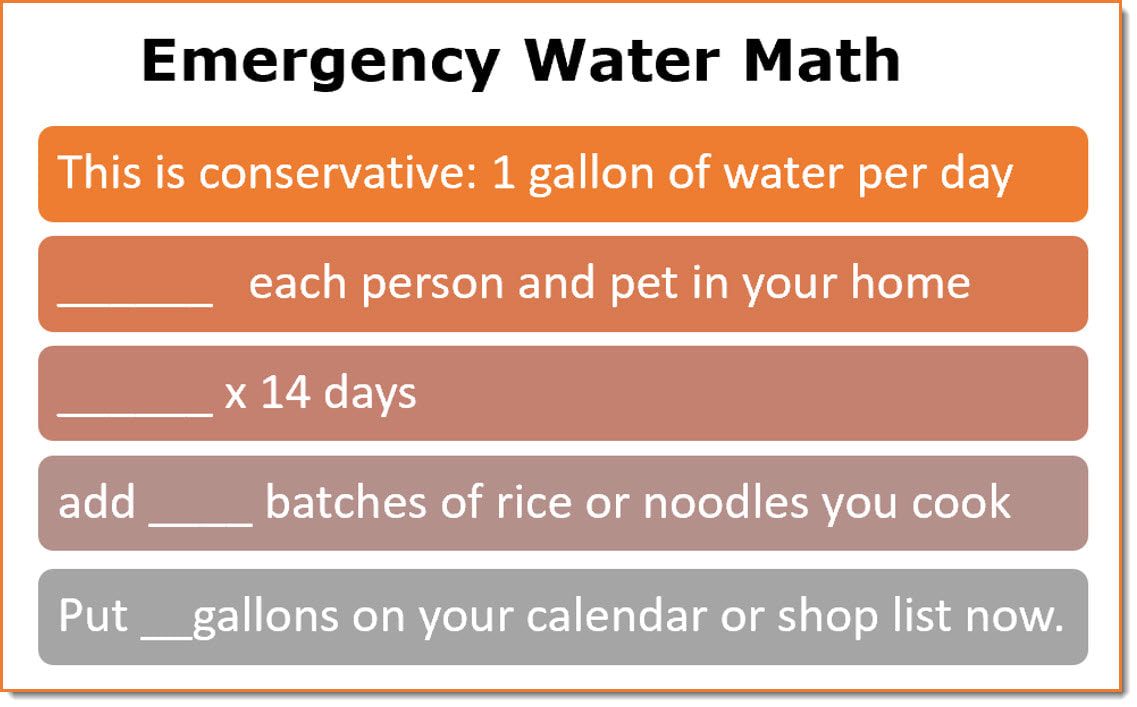
The safest water you'll have is the water you store BEFORE a disaster occurs. How much water should you store? Use the simple calculation below to determine the minimum amount you'll need to survive for two weeks. Then, buy water or start filling up the water containers today. It's that important! 
Picture
Picture

Water storage containers

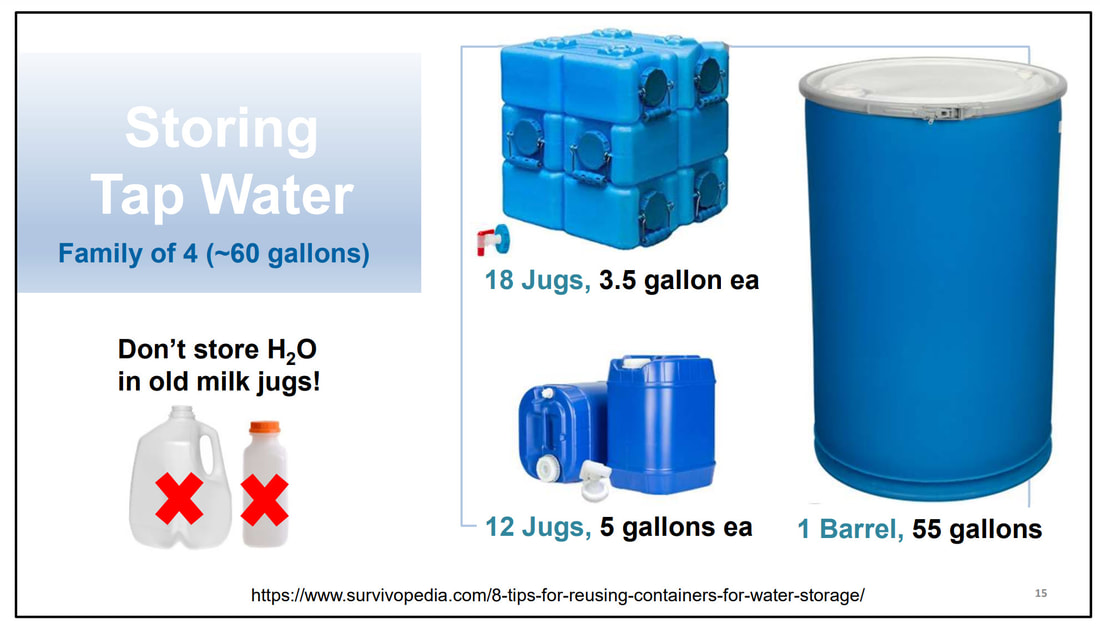
You can purchase emergency water, or store it in a variety of clean, food-grade containers. Some containers stack efficiently on top of each other, making it easy to store in a closet or other small spaces. Larger containers will need a permanent location because they can't be moved. For example, a 55-gallon barrel can store enough water to meet the emergency needs of a family of four, but will need a permanent location, such as in a garage or undercover outside. Be sure to store water at home, and also in your cars and go bags, so you'll never be caught without clean water. 
Picture

Water sources in your home

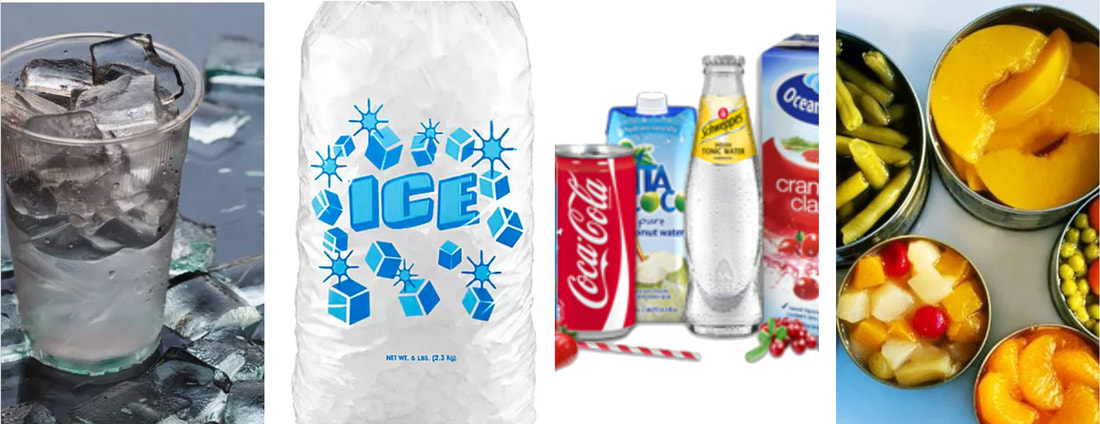
If your emergency water runs out before the disaster ends, you'll need to look for additional water at home or in your environment. Start looking in your home for additional sources, such as ice cubes made from uncontaminated water, commercially bottled beverages and canned fruits.  
Picture

Preserve water in your house

Another possible source of clean water after a disaster is the municipal water already in your pipes, bathtub, and hot water heater, once you have shut off the water main to protect the water in your house from cross contamination. These can be captured at the time of the disaster, if you get your main turned off and learn how to access the water. If you have a hot water tank, you can count this water as part of your emergency water supply, typically between 30 to 50 gallons of water. Make sure you have a food grade hose and bucket, and practice draining your water tank. You may want to filter this water to remove any sediments that may be in the water. 
Check out RegionalH2O's Water Preparedness site for steps on how to drain water from your hot water tank and other water preservation tips, or watch the video below. ​

Making potable water

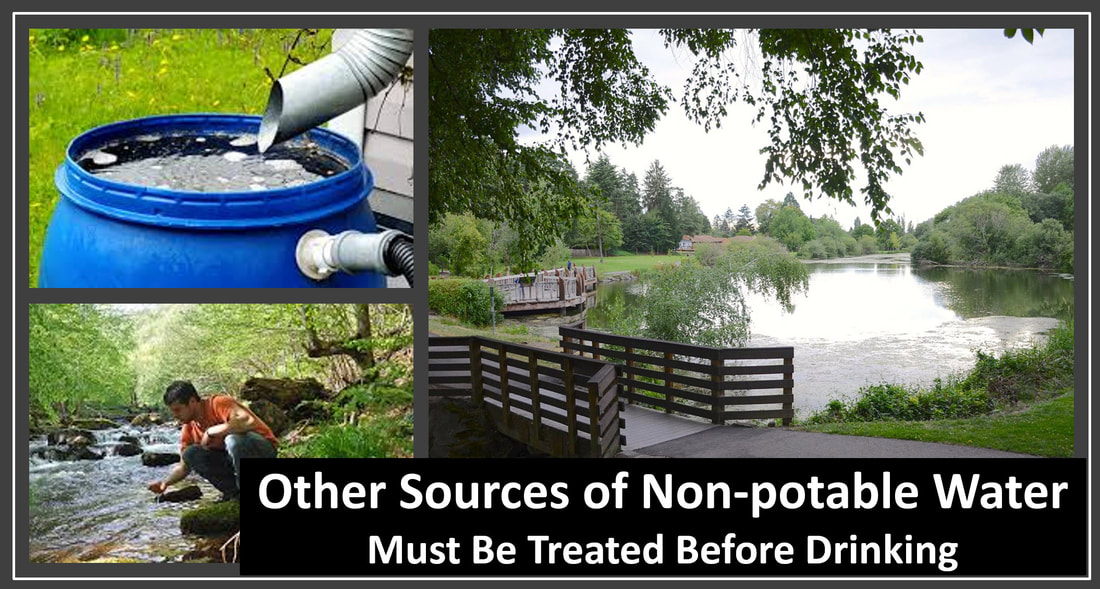
In an extended disaster, you may need to make potable water starting from a source in your environment. This takes some planning, special equipment, and know how. Making potable water starts from finding a suitable source of water. 
​Do not drink or use for sanitation any water that smells bad, looks discolored, or is contaminated with fuel or toxic chemicals.  Don't use flood water,  ever.
Do NOT drink or use for sanitation any water that (1) smells bad, (2) looks discolored, or (3) is contaminated with fuel or toxic chemicals. ​
What about your pool or spa? 
​You might be tempted to use water from your hot tub or pool as a source for drinking water, but it's not a good idea because the chemicals, human skin cells, and other contaminants in this water make it unsafe for consumption. Don't use water from your toilet tank, water feature, or waterbed for drinkable water. These sources are ok for sanitation, such as flushing toilets or washing dishes, but not for drinking. 
Identify water sources in your neighborhood
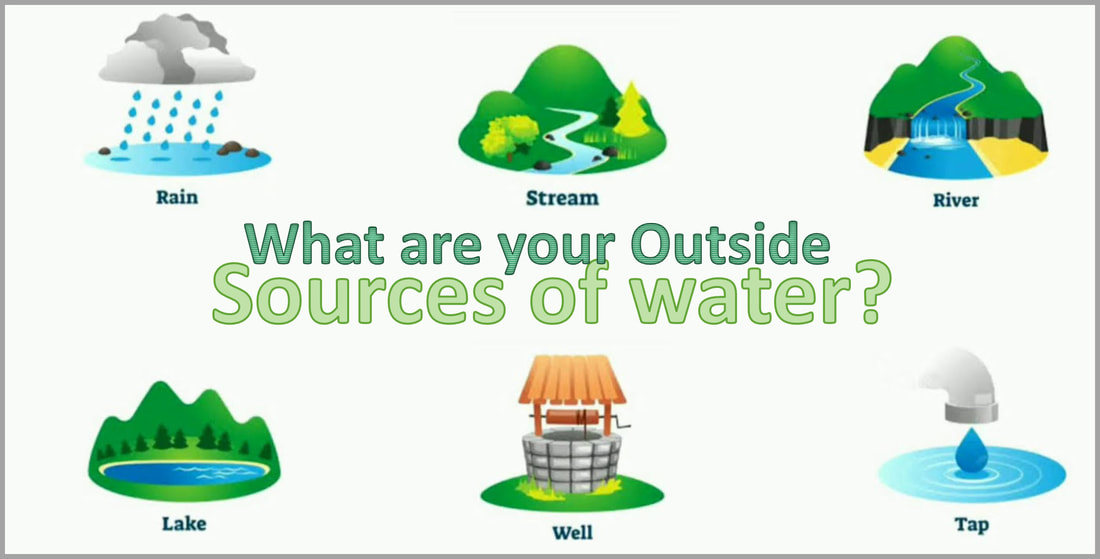
Take a moment to think about what outside sources of water you may have near your home or in your neighborhood that could be good sources for making potable water.  Walk the neighborhood in search of these potential sources. 
Picture
Picture

How to purify water

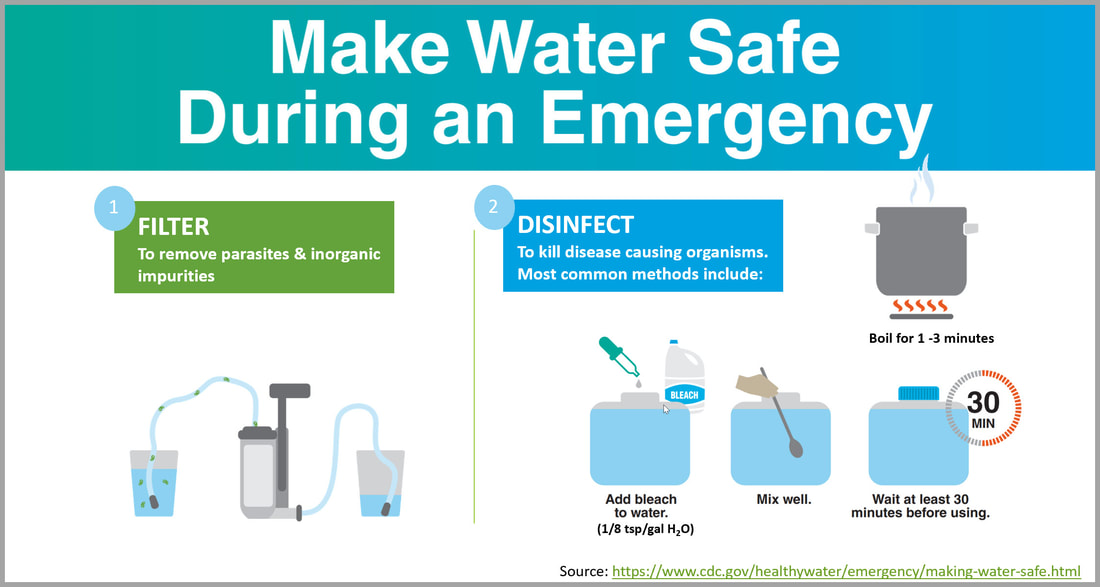
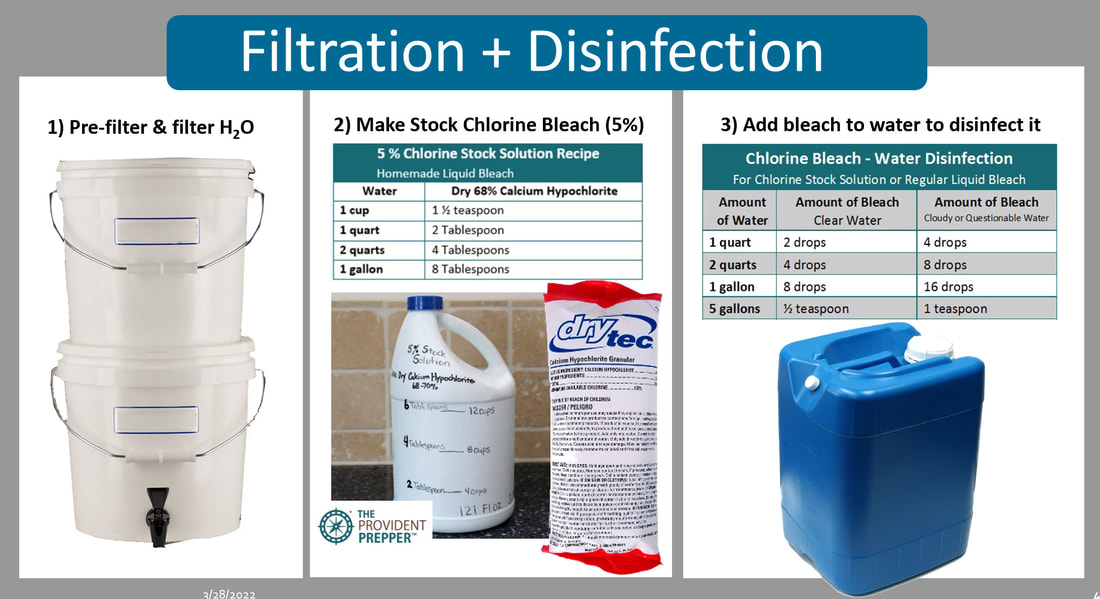
​Use a combination of methods to make raw water safe to drink. Two steps are really important:
  1. Filtration gets rid of the big stuff, and most of the smaller stuff, such as parasites and inorganic impurities – things like arsenic, nitrates and heavy metals.
  2. Disinfection kills disease-causing pathogens. ​
Picture
There are multiple methods for disinfection, with varying degrees of efficacy. Two of the simplest methods are shown above. If you have the fuel, boiling is the most effective way to kill all of bugs. Fresh bleach (less than 6 months old) kills most of the bugs, if used in the right quantities. For both methods, you want to combine with filtration. The CDC has specific instructions on each of these methods on their website. ​

Building a 2-bucket water filter system

In this video, you’ll learn how to build a two-bucket water filtration system, which is important in making sure you have plenty of clean water in the event of a disaster. Barbara Bracken from Tualatin Neighborhood Ready! is joined by Claudia Gray from Cedar Hills Ready! to show you how easy it is to put it all together by yourself. Special thanks to Doug Knight, a fellow Community Emergency Response Team (CERT) member and amateur radio and resiliency volunteer.
Kit Supplies & Tools include:
  • Instruction and maintenance sheet, provided by JustWater.me. 
  • Drill & the following drill bits: 3/4, 5/8, & 1/8
  • Two (2) five-gallon food grade buckets with lids, available from grocery stores, hardware stores, or online.
  • 18" length of 5/16" outer diameter plastic tubing, available at hardware stores and some pharmacies.
  • A high quality water filter. We do not endorse any particular products or filters, and we are not affiliated with any water filtration companies. The filter we used in this video is the 4x4 ceramic filter, designed and manufactured by Texas-based company, Just Water. 
There are a variety of filters available on the market. Some better than others. Check out the guidance from the CDC, which includes recommendations on what to look for in filter systems. 
Picture
Click image above to download the instruction and maintenance instructions sheet. (Provided by Justwater.me.)_
Picture
Cross section of the two bucket filtration system. (Original Artwork Source: Susan Ronning, Portland Prepares.)

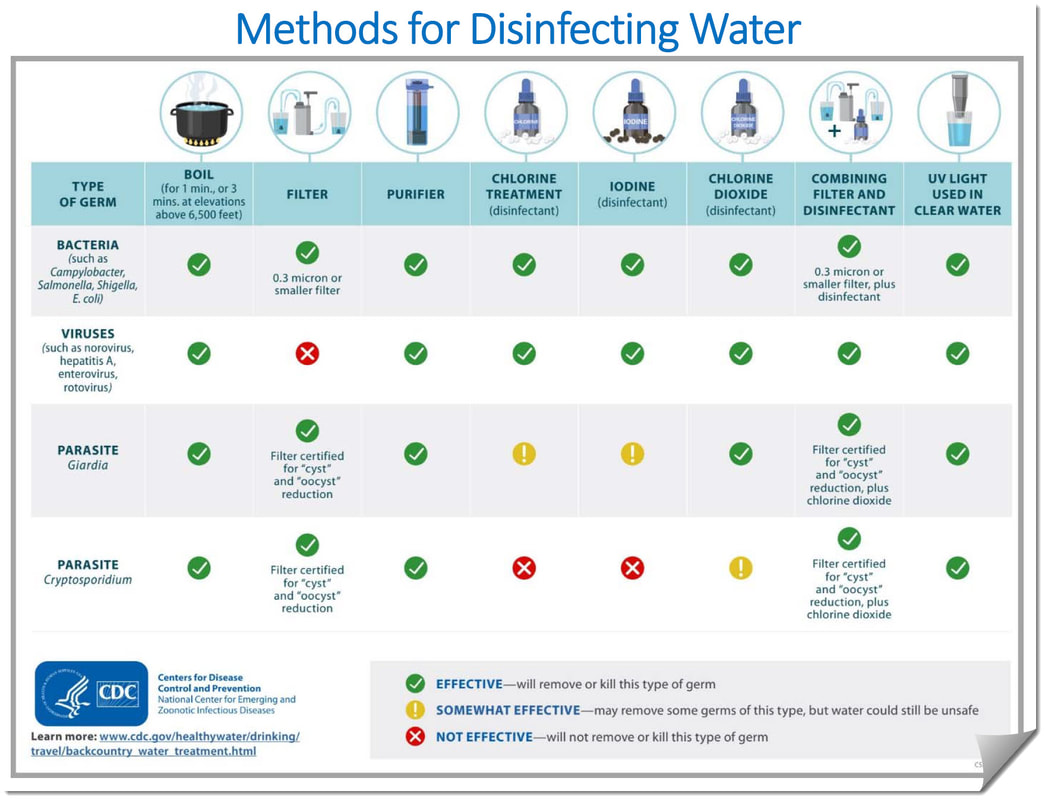
Methods for treating water

The CDC says that no matter what filter you use, it may not eliminate all biological risks. The filter we used in this video says it has 99.999% bacterial removal, and virus reduction, so adding a boiling cycle or an additional disinfectant cycle is a good additional precaution and is recommended by the CDC. For example, you can use a bleach shock (1/4 teaspoon/gallon water) prior to filtering. The CDC provides a handy chart describing the efficacy of a variety of water disinfection methods. 
Picture

Creating a fresh batch of bleach

One of the most often recommended techniques is to disinfect water using regular chlorine bleach. However, household beach has a shelf life of only 6 months from the time of production. The chlorine gradually looses potency while in storage, which means that older bleach may not kill bacteria and viruses lurking in your water.

What's a shelf-stable and economical alternative to bleach? Calcium Hypochlorite, also known as pool shock, can be used to create a fresh batch of liquid bleach when you need it. Just in time bleach, with full potency. To learn more about how to do this, check out this by the Provident Prepper blog, "Disinfecting Water Using Calcium Hypochlorite." 
Picture

Disinfecting water in 55-gallon drums

According to Jay Whimpey, PE, President of The American Civil Defense Association, you can disinfect water directly with 68% Calcium Hypochlorite Dry Bleach Powder or Granules:
“For long-term disaster situations, it might be more convenient to disinfect the water in a 55-gallon drum with dry bleach powder or granules. In that case, the drum is filled with at least 50 gallons of water through the filter bag. One-half teaspoon of dry powder or granules is added to the drum and then the drum is sealed and left for a least one day before consuming the water. The bleach will dissolve and mix if given adequate time.”  

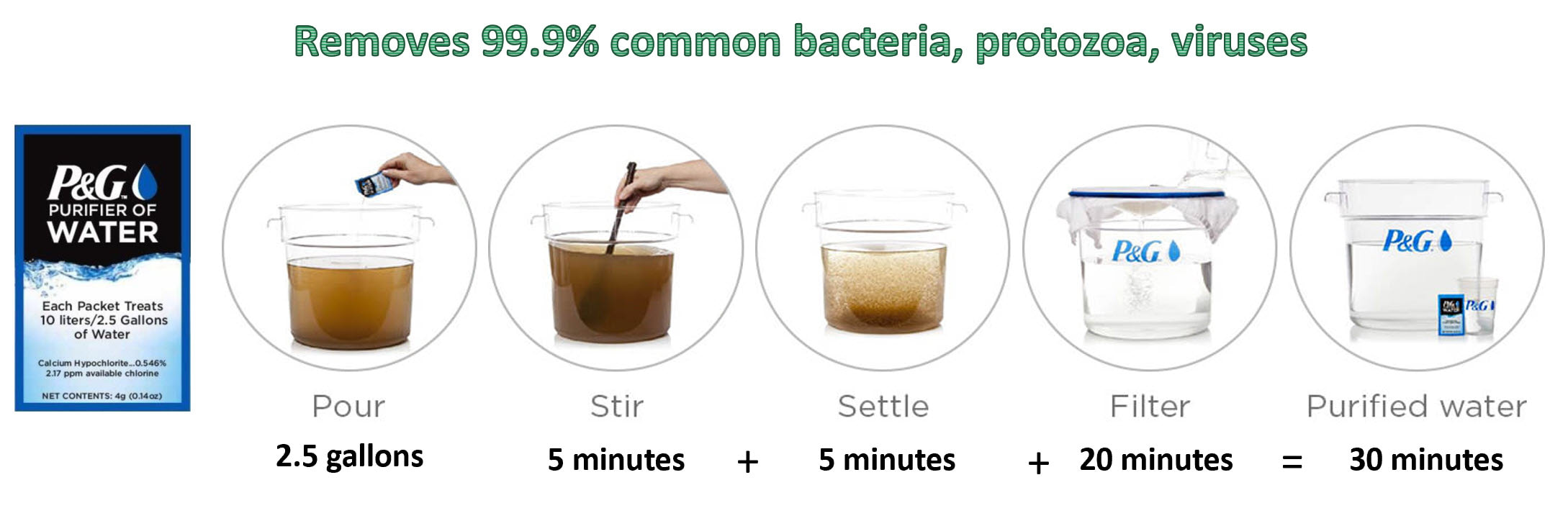
Purifier of Water: one and done!

​A fast and easy way to purify water is a product called, Purifier of Water (PUR). One tiny packet can purify up to 2.5 gallons of water in 30 minutes, without the need for a special filter. PUR was developed by Proctor & Gamble in collaboration with the CDC and the World Health Organization. It is used widely in developing countries as a way to produce clean water. The World Health Organization classifies P&G Purifier of Water as providing comprehensive protection in that it: reduces kills bacteria, viruses and protozoa and removes metals and chemicals. Check out the video and steps below to see how it works. 
Picture

More resources

Check out these sources for more information and practice: 
Picture
Water Survival Basics
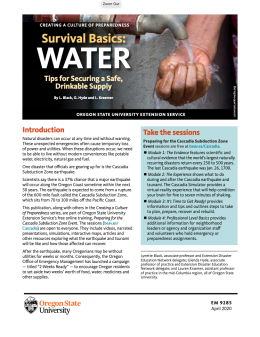
Download Oregon State Extension Service's Survival Basics: Water brochure. Or take their free online Water Survival Basics course.  In this course, you'll explore a variety of methods for purifying and storing water for an extended emergency. You'll learn how to find or make safe water from additional sources. ​

Purifying Mucky Water
Our speaker, Stan Houseman, is the founder of
QuakeUp! NW, and the master of disaster. In this video, he talks about how to make clean drinking water from mucky water. 

Rainwater Harvesting
Find out how to harvest rainwater using a simple barrel system. Lincoln Thomas, our speaker, has a degree in Civil Engineering, and 5 rain barrels in his backyard.  
Contact Us
​About Us
Picture
© Neighbors Ready! 2026. All rights reserved.