Eliminate Home Hazards Click to open FEMA's National Risk Index Click to open FEMA's National Risk Index
How do you prepare your home for disasters?
|
|
Several online resources can help you assess the disaster risks in your area, including interactive maps based on data collected by scientists.
FEMA National Risk Index Disasters have been increasing in frequency over the last 20 years, according to FEMA's national risk index for natural disasters. In Oregon, 141 disasters have been declared since 1953. The most frequent risks in Oregon include fires, severe storms, floods, and other hazards. Earthquakes are another significant risk that may not happen as frequently, but can be non-the-less extremely dangerous and destructive when they happen. Cascadia subduction zone earthquakes have the potential to occur every 190 to 1,200 years. Scientists predict that there is a 37% chance that a megathrust earthquake of 7.1 magnitude or greater will occur along the Cascadia Subduction fault zone within the next 50 years, and a 10% chance that an event could occur within the next 30 years. To find out specific risks in your area, check out FEMA's national risk index. Oregon Hazard Mapping Tool Another tool available for learning about your specific hazards in Oregon is the HazVu Statewide Geohazards Viewer, developed by the Oregon Department of Geology and Mineral Industries (DOGAMI). You enter your address, and check the types of natural hazards you want to see for that address. Check out the 10-minute video below or the blog on the Earthquake Regional Impact Analysis. |
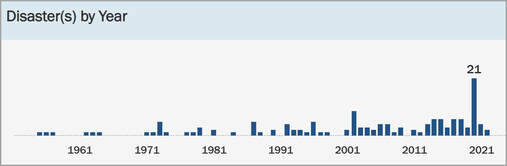
FEMA's data shows disasters increasing in frequency in Oregon
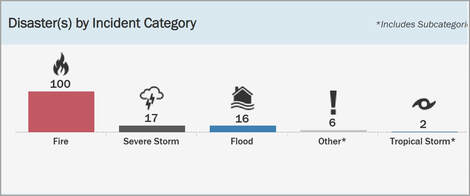
Types of disasters in Oregon since 1953 from FEMA risk index
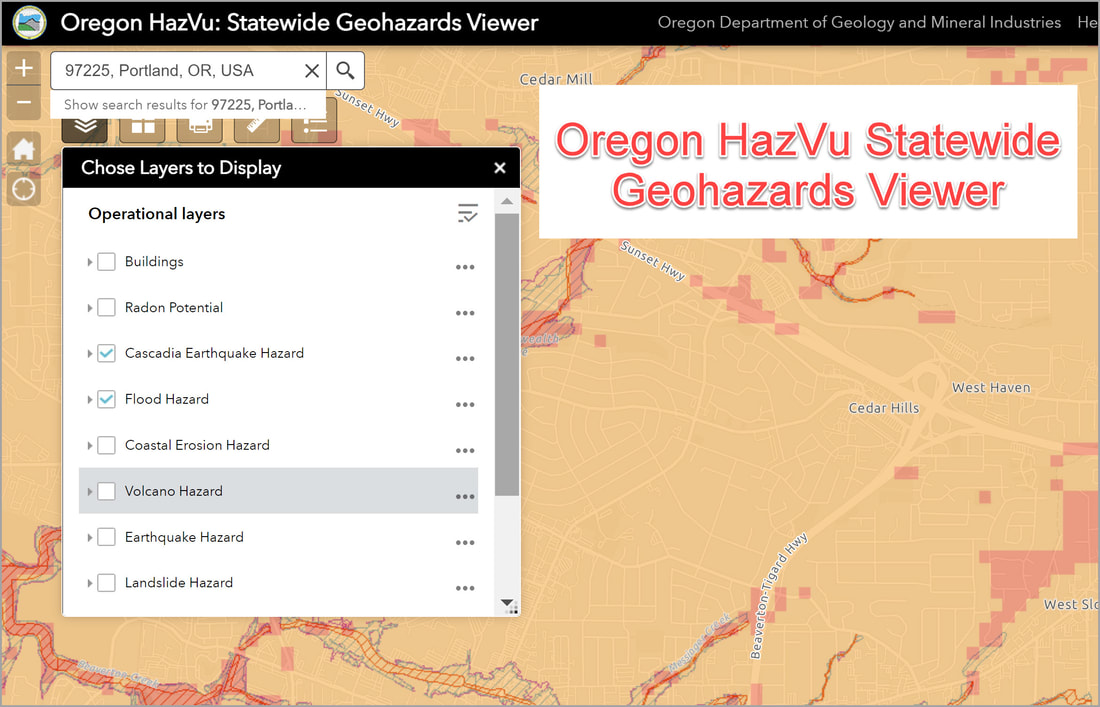
Click the image to open the interactive hazard map
|
|
Unprecedented droughts and coast-to-coast heat domes are fueling extreme heat and wildfires. Are you ready to escape the heat and subsequent mega fires? If not, watch this one-hour program to learn from our firefighters at Tualatin Valley Fire & Rescue (TVF&R). They talk about how and when to evacuate, what to prepare for, and what to bring. You'll learn something valuable that may just save your life or the lives of your friends and family.
|
|
|
How well do you know your fire extinguisher? How will you safely evacuate your home in a fire, if your only route out is via a second story window? In this 40 minute video, you’ll learn how to prepare your home with fire prevention in mind—how to mitigate fire risk and identify common home hazards. You'll also learn what actions to take to avoid injury, when and how to use an extinguisher, and how to exit structures safely. Special thanks to Deputy Fire Marshal Stephanie McKee from Tualatin Valley Fire & Rescue for presenting this program.
|
|
|
Regional Earthquake Impact Analysis
The Regional Disaster Preparedness Organization (RDPO) partnered with the Oregon Department of Geology and Mineral Industries (DOGAMI) to create a report describing potential impacts to Clackamas, Multnomah, and Washington counties from earthquakes, including a magnitude 9.0+ Cascadia Subduction Zone earthquake. The report provides damage and casualty estimates to buildings, people, and key infrastructure sectors resulting from a major earthquake in the Portland metropolitan region. |
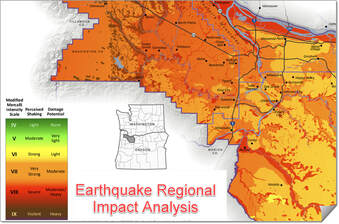
Click the image for the full report
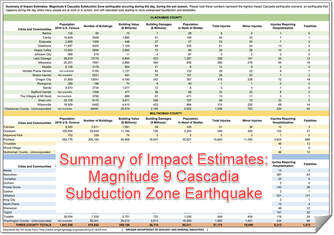
Click the image for the summary
|